 首页
首页How to Choose the Right Threaded Rebar Coupler for Your Project?
 211
211
 August 26, 2026
Traditional lap splicing creates severe rebar congestion in modern high-load concrete structures. Overlapping bars waste massive amounts of steel and heavily restrict aggregate flow during concrete placement. This congestion often leads to concrete honeycombing, which directly compromises long-term structural durability and load transfer. Engineers and contractors need a more efficient, reliable method to connect reinforcement bars without overcrowding the formwork.
Selecting a mechanical splice presents a strict engineering and procurement challenge. You must choose a system that adheres to local and international building codes while minimizing on-site labor hours. The solution must prevent equipment bottlenecks and eliminate installation errors. Relying on outdated connection methods slows down project timelines and increases structural risks on site.
A rigorous, multi-point evaluation framework is necessary to assess different mechanical splicing technologies. You must match specific connection types to your project constraints, structural demands, and compliance requirements. Understanding the technical differences between various coupler systems ensures a safe, efficient, and code-compliant build from the foundation to the roof.
Key Takeaways
-
Code Compliance is Non-Negotiable: A reliable rebar coupler must meet or exceed 125% of the specified yield strength of the rebar (standard ACI provision for Type 1 and Type 2 connections) and align with global standards like ISO 15835.
-
Technology Dictates Workflow: The choice between parallel threads, tapered threads, and specialized systems directly impacts on-site equipment needs, end-preparation requirements (like square cutting), threading time, and labor.
-
Precision Matters: Systems like the rib peeling rolling thread coupler offer superior thread integrity, fatigue resistance, and cross-sectional area preservation compared to traditional cutting methods.
-
Supplier Vetting is Critical: Partnering with a verified threaded rebar coupler manufacturer ensures material traceability, consistent metallurgical quality, and essential on-site technical support.
Defining Success Criteria for a Rebar Coupler
Tensile Strength and Code Compliance (Type I vs. Type II Connections)
Structural engineers classify mechanical splices into two main categories based on performance under load. Type I connections handle standard load applications. They provide reliable tension and compression transfer for everyday structural elements like standard columns and slabs. Type II connections serve seismic applications. They require high ductility and must force the rebar to yield outside the splice region during an earthquake or extreme wind event.
The ACI 318 building code establishes strict baseline requirements for these connections. It mandates that mechanical splices must develop at least 125% of the bar's specified yield strength. This ensures the connection does not become the weakest link in the structural frame. Meeting this standard is an absolute requirement for structural integrity and safety.
Global projects require adherence to broader international standards. Eurocode 2, BS 8110, and ISO 15835 dictate specific performance metrics for mechanical splices across different regions. Evaluating third-party testing reports is a mandatory step in the procurement process. You must verify ultimate tensile strength and yield strength performance data through certified, independent laboratories before approving any system for site use.
|
Connection Type |
Primary Application |
Performance Requirement |
Yield Behavior |
|---|---|---|---|
|
Type I |
Standard structural elements (gravity loads) |
125% of specified yield strength |
Yielding may occur at the splice |
|
Type II |
Seismic zones and high-wind structures |
125% of specified yield strength + ultimate strength criteria |
Yielding must occur outside the splice region |
Slip Resistance, Flush Bearing, and Cyclic Loading Capabilities
Minimal slip within the connection is a primary concern for structural engineers. Excessive slip allows the rebar to move under heavy loads, which directly causes concrete cracking and structural degradation over time. A high-quality rebar coupler tightly secures the bars to prevent this dangerous movement and maintain the integrity of the surrounding concrete matrix.
Precise end preparation ensures proper load transfer through the connection. Square cutting the rebar ends is a mandatory field practice. This creates a flush bearing surface between the two rebar ends inside the coupler body. Flush bearing is absolutely vital for transferring compressive loads directly through the steel rather than relying solely on the threads to carry the weight.
Infrastructure and high-rise projects in seismic zones demand rigorous cyclic and fatigue testing. Couplers endure repeated stress reversals during earthquakes or heavy dynamic loads. Evaluation criteria must confirm the splice can withstand high-cycle fatigue without thread deformation, slip, or catastrophic failure.
-
Cut the rebar end perfectly square using a specialized cold-cutting saw.
-
Inspect the cut surface to ensure it is flat and free of burrs or jagged edges.
-
Process the thread according to the specific coupler system requirements.
-
Thread the coupler onto the first bar until it reaches the center stop point.
-
Insert the second bar and tighten to the specified torque to ensure flush bearing.

Evaluating Threaded Rebar Coupler Types
The Rib Peeling Rolling Thread Coupler
The mechanical process for this system involves two distinct steps performed by a single machine. First, specialized cutting blades peel away the longitudinal and transverse ribs at the rebar end to create a smooth cylinder. Next, the machine cold-rolls the exposed steel to form the thread profile. This method creates a highly precise and uniform connection point that matches the internal threads of the coupler perfectly.
The primary engineering advantage lies in the cold-rolling process itself. Cold-rolling work-hardens the steel and maintains the parent bar's cross-sectional area. Because no material is cut away to form the grooves, the thread is never the weakest point of the bar. A rib peeling rolling thread coupler delivers exceptional tensile strength and fatigue resistance for heavy civil applications.
This system requires specialized peeling and rolling machines on-site or at a pre-fabrication facility. It offers rapid production speeds once the equipment is calibrated and the operators are trained. It is ideal for large-scale projects requiring thousands of consistent, high-strength connections with minimal downtime.
Upset Forged Parallel Thread Couplers
Upset forging is a multi-step mechanical process that alters the physical shape of the rebar. Operators first square-cut the rebar end to ensure a flat surface. They then use a hydraulic forging machine to enlarge, or upset, the end of the bar. Finally, they apply a tangential cut to create the threads on this newly enlarged section.
Upset forging provides excellent structural reliability for heavy loads. Because the threaded section has a larger diameter than the parent bar, the connection easily exceeds the 125% yield strength requirement. It competes closely with cold-rolling in terms of ultimate strength and is widely accepted in global building codes.
This method involves significant logistical trade-offs on the job site. It requires heavy, power-intensive forging equipment that takes up valuable space. Alternatively, it forces contractors to rely on off-site pre-fabrication, which complicates logistics, transportation, and material handling.
Tapered Thread Couplers
Tapered threads feature a conical profile rather than a straight parallel line. This design allows for quicker alignment during installation inside the rebar cage. Workers need fewer turns to achieve full engagement, which speeds up the physical connection process inside the forms and reduces crane hook time.
Despite the speed advantage, tapered systems carry specific installation risks. The conical shape increases the risk of cross-threading if bars are slightly misaligned during assembly. Furthermore, achieving full load transfer requires precise torque wrench application. If the torque is incorrect, the connection will fail under stress.
Shear Bolt / Set Screw Couplers vs. Threaded Systems
Basic set screw couplers use shear bolts to grip the rebar directly. They do not require any end preparation or threading machinery. Workers simply insert the rebar into the sleeve and tighten the bolts until the heads shear off at a predetermined torque. This makes them convenient for tight spaces, repair work, or connecting unknown rebar grades.
While set screw couplers can achieve the 125% yield strength requirement for Type I connections, they have distinct limitations. When exploring different threaded rebar coupler types, engineers generally find that threaded systems offer superior reliability. Threaded connections provide better longevity, lower slip, and higher performance for high-fatigue, Type II seismic applications.
LR Type Rebar Coupler for Construction Connection
Left-Right (LR) couplers feature opposing thread directions on each half of the internal cylinder. They serve highly specific and challenging construction scenarios where standard rotation is impossible. Engineers specify them when standard parallel couplers cannot be used due to space constraints or fixed bar positions.
An LR type rebar coupler for construction connection solves the problem of connecting two fixed rebar ends. When neither bar can be rotated, turning the coupler body draws both bars together simultaneously. This is essential for closing gaps in precast elements, tunnel linings, or heavy cage assemblies where the steel is already tied off.
Technical Evaluation: Matching Technology to Project Constraints
Installation Speed and On-Site Equipment Needs
Labor hours heavily influence the total cost of mechanical splicing on any major project. Threading bars on-site requires dedicated machinery, stable power supplies, and trained operators. Ordering pre-threaded bars shifts the labor off-site but demands precise logistical planning to avoid delays and manage inventory effectively.
You must evaluate the footprint and power requirements of threading machinery before selecting a system. Large forging machines require significant space and heavy three-phase power supplies. Smaller rolling machines offer more flexibility and can be moved around the site easier. Maintenance needs, spare parts availability, and equipment downtime must also factor into your scheduling calculations.
Rebar Congestion and Clearance Requirements
The physical dimensions of the splice matter greatly during the concrete pour. The outer diameter and length of the coupler directly impact concrete cover and aggregate clearance. Bulky couplers can block the flow of aggregate during concrete pouring, leading to dangerous voids and honeycombing around the connection.
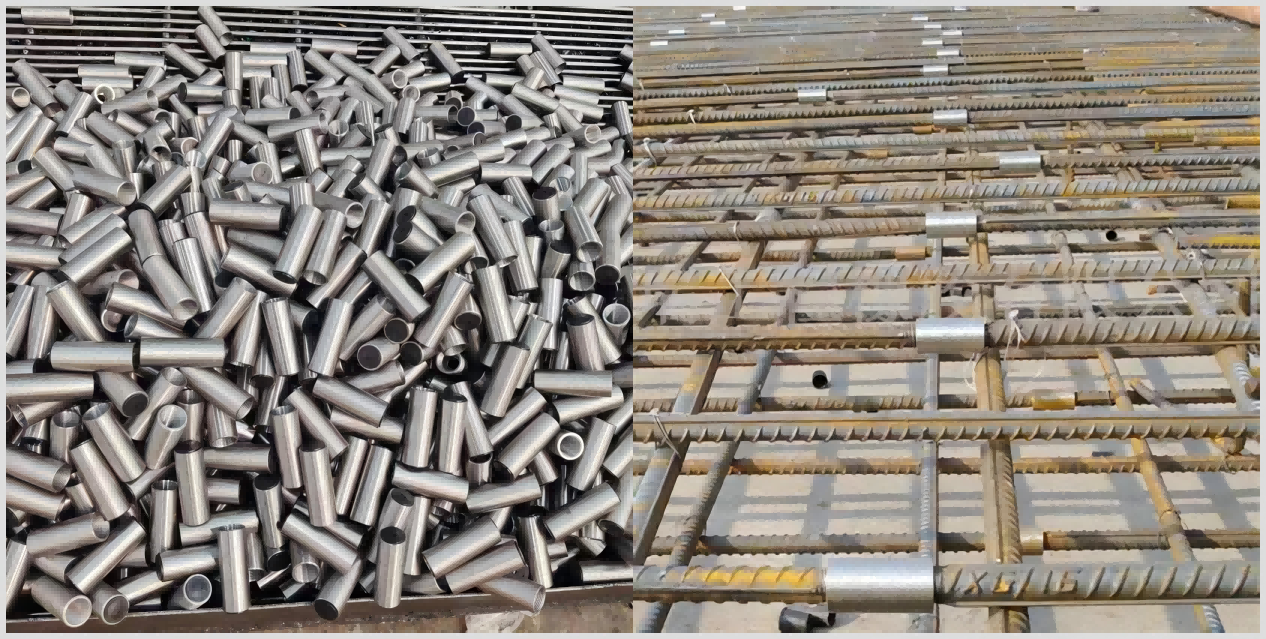
Mechanical splices effectively alleviate the congestion caused by traditional lap splices. A slim threaded rebar coupler maintains clear spacing between bars. This is especially critical in heavily reinforced columns, shear walls, and complex beam-column joints where space is severely limited and concrete consolidation is difficult.
Weather, Environment, and Longevity
Environmental conditions dictate technology choices on exposed sites. Systems requiring epoxy or grout are highly sensitive to temperature fluctuations and moisture levels. Purely mechanical threaded systems perform reliably regardless of rain, snow, or extreme heat during the installation process.
Material durability is paramount for exposed or aggressive environments. Projects near saltwater, chemical plants, or wastewater facilities require anti-corrosion coatings. Galvanized or epoxy-coated couplers provide necessary protection against long-term degradation and rust.
You must also address the susceptibility of different thread types to physical damage. Threads can easily rust or suffer impact damage during transit and staging. Proper handling, storage protocols, and the use of protective caps are essential to maintain connection integrity before assembly.
How to Vet a Threaded Rebar Coupler Manufacturer
Material Quality and Traceability
Raw material selection defines the ultimate strength and reliability of the splice. High-quality carbon steel or specialized alloy steel is necessary for enhanced longevity and proper load transfer. Substandard steel leads to brittle failures under stress and compromises the entire structure.
A reputable threaded rebar coupler manufacturer provides complete transparency regarding their supply chain. You must demand mill test certificates and batch traceability for every shipment arriving on site. ISO 9001 compliance guarantees consistent metallurgical properties across large production runs and ensures quality control.
Technical Support, QA, and Training
The best manufacturers do more than supply steel components. They provide comprehensive on-site training for threading equipment operators, ironworkers, and installation crews. Proper technique is crucial for achieving code-compliant connections and maintaining production speed.
Clear technical manuals and calibration guidelines for torque wrenches are mandatory for site QA teams. Responsive engineering support helps resolve unexpected on-site challenges quickly without halting the pour schedule. Partnering with a manufacturer that offers robust QA support minimizes installation errors and rework.
Implementation Risks and Mitigation Strategies
Poor End Preparation and Square Cutting Failures
Uneven load transfer occurs if rebar ends are not perfectly square-cut before threading. Angled cuts prevent flush bearing inside the coupler body. This leads to excessive slip and potential thread shearing under heavy compressive loads, which can cause localized concrete failure.
Mitigation requires strict cutting protocols enforced by site management. You must mandate the use of specialized cold-cutting saws or band saws. Abrasive wheels or flame cutting distort the steel's metallurgy and create uneven, hardened surfaces. Precision cutting is the absolute foundation of a secure mechanical splice.
Thread Damage and Contamination
Exposed threads are highly vulnerable to site conditions. Dragging bars across the site, dropping them from cranes, or lifting them improperly causes severe thread damage. Dirt, mud, concrete splatter, and rust contamination prevent full engagement inside the coupler body.
Implement strict material handling protocols for all threaded rebar. Mandate the use of plastic thread protectors during transport, staging, and lifting. Require pre-installation visual inspections by the ironworkers to ensure all threads are clean, straight, and undamaged before assembly begins.
Improper Torque and Incomplete Engagement
Relying on "feel" or standard pipe wrenches to tighten threaded connections is dangerous and non-compliant. Under-torqued couplers will slip under load and cause cracking. Over-torqued connections can damage the threads, strip the grooves, or induce unnecessary stress into the splice.
Establish rigid QA/QC protocols for installation and inspection. Mandate the use of calibrated torque wrenches for every single connection on site. Implement marking systems, such as paint striping across the coupler and bar, to visually verify full engagement and prevent loosening. Conduct random sample testing to ensure consistent compliance across the crew.
Conclusion
The right mechanical splice balances structural safety with constructability and longevity. Achieving the required 125% yield strength is just the baseline for modern construction. The rib peeling rolling thread coupler stands out for preserving cross-sectional integrity without requiring heavy forging equipment. It offers a highly reliable, fatigue-resistant connection for demanding structural applications.
Filter your options logically based on project realities. First, ensure strict local code compliance, verifying Type I/II and ISO standards. Second, evaluate on-site logistical constraints, including equipment footprint and the need for fixed versus rotatable bars. Finally, assess the total installed cost, factoring in labor, equipment efficiencies, and crane time.
-
Request detailed technical data sheets and installation manuals from your shortlisted suppliers.
-
Review independent third-party tensile test reports to verify performance claims against local codes.
-
Schedule a pilot demonstration with a verified manufacturer to evaluate the threading process and installation speed firsthand.
-
Procure calibrated torque wrenches and establish a clear QA/QC inspection protocol for the ironworkers.
FAQ
Q: What is the difference between a Type 1 and Type 2 rebar coupler?
A: Type 1 couplers handle standard tension and compression loads, developing 125% of the bar's yield strength. Type 2 couplers are designed for seismic applications. They must maintain strength beyond the bar's actual yield point, forcing the rebar to yield outside the splice and ensuring structural ductility during earthquakes.
Q: Why is a rib peeling rolling thread coupler preferred over cut threads?
A: Cutting threads removes steel, reducing the bar's cross-sectional area and creating a weak point. Rib peeling and cold-rolling displaces the steel instead of cutting it. This work-hardens the thread profile, preserves the original diameter's strength, and significantly improves fatigue resistance.
Q: Do I need special equipment to install threaded rebar couplers?
A: Installing the couplers usually requires standard pipe wrenches or calibrated torque wrenches. However, preparing the rebar ends requires specialized peeling, rolling, or forging machinery. You can either rent this equipment for on-site use or order pre-threaded bars from a fabrication facility.
Q: How do I connect two fixed rebar ends that cannot be rotated?
A: You use a Left-Right (LR) type coupler. This coupler features opposing internal threads. By placing it between the two fixed bars and turning the coupler body itself, it draws both rebar ends inward simultaneously, creating a secure connection without rotating the heavy bars.
Q: Why is square cutting the rebar end so important?
A: Square cutting ensures the two rebar ends meet flush inside the center of the coupler. This flush bearing allows compressive loads to transfer directly from bar to bar. If the cut is angled, the load transfers entirely through the threads, which can cause slip or failure.
SHARE