 首页
首页How Threaded Rebar Couplers Work: A Complete Guide
 305
305
 August 26, 2026
High-density reinforcement in modern structural engineering presents compounding challenges on site. Concrete congestion makes pouring difficult and risks structural voids. Traditional lap splicing wastes significant material. On-site welding has strict limitations regarding weather conditions and steel grades. Detailing heavily reinforced nodes becomes increasingly complex. Traditional lap splicing requires excessive rebar overlap. This increases steel consumption by up to 20% in heavily reinforced zones. It compromises concrete flow and structural consolidation. It also complicates the design and production of reinforced concrete. Mechanical splicing provides an engineered alternative to these outdated methods. A threaded rebar coupler transfers load directly end-to-end. This ensures the splice exceeds the yield strength of the parent bar. The joined reinforcement behaves as a single continuous length of steel, solving the core issues of congestion and material waste.
-
Structural Superiority: Mechanical splicing eliminates the reliance on concrete for load transfer, maintaining structural integrity even during seismic events or concrete failure by mimicking continuous rebar behavior.
-
Process Efficiency: The rib peeling rolling thread coupler system provides a parallel thread connection that preserves the cross-sectional area of the rebar, ensuring 100% bar break performance.
-
Cost vs. Value: While unit costs for couplers exceed lap splicing materials, the reduction in total steel tonnage, simplified CAD detailing, and accelerated construction timelines yield a net positive ROI for large-scale projects.
-
Vendor Selection: Partnering with a certified threaded rebar coupler manufacturer ensures material traceability, precise thread tolerances, and compliance with international building codes (ACI, BS, Eurocode).
The Mechanics of Mechanical Splicing: Moving Beyond Lap Joints
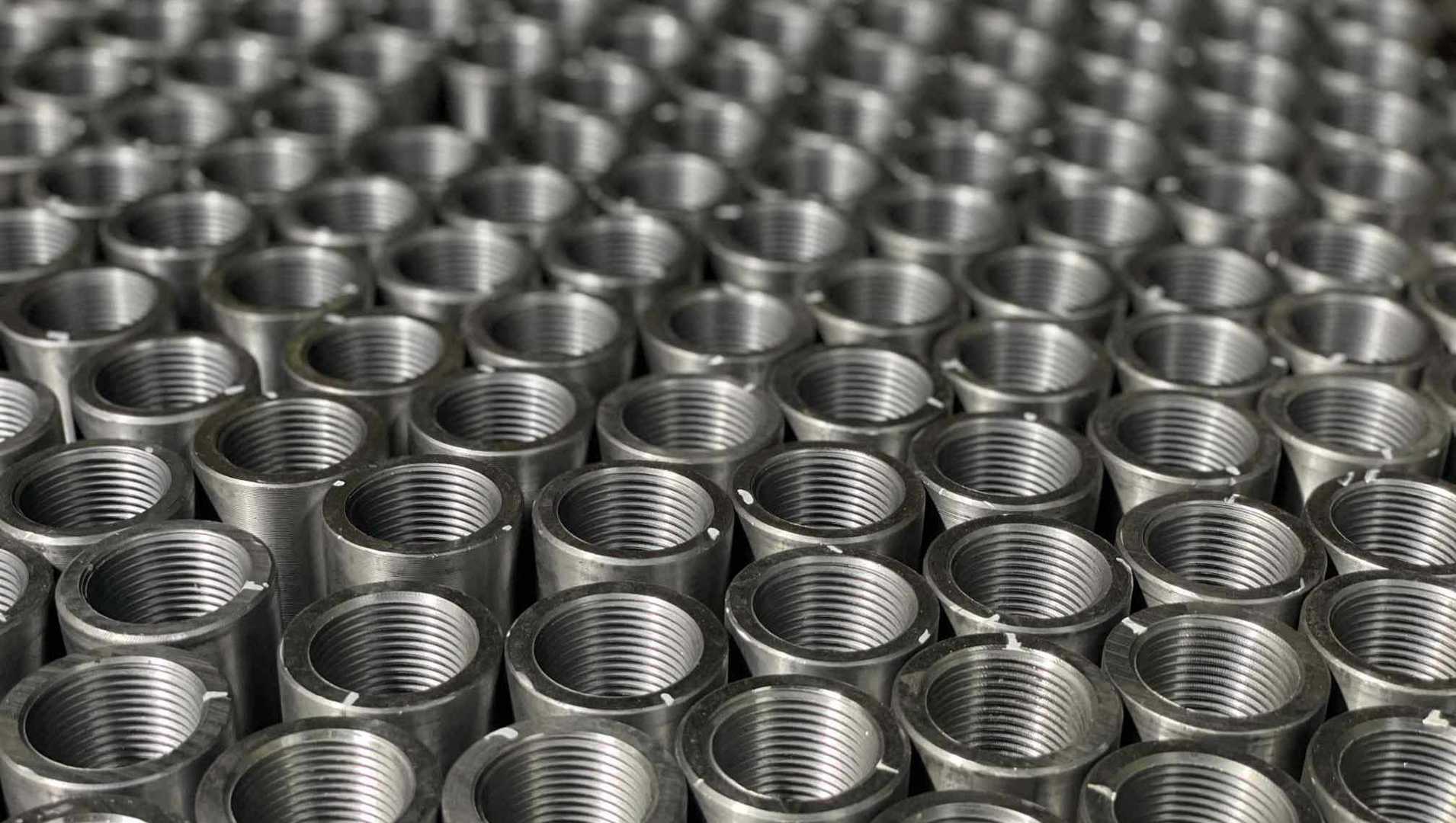
Traditional lap splicing has severe limitations in modern construction. Larger bar diameters and higher grade steel require formulaic increases in lap length. This complicates structural design and crowds the formwork. Congested rebar prevents proper aggregate flow during concrete placement. When you have multiple layers of heavy reinforcement, getting the vibrator down into the forms becomes nearly impossible. This leads to honeycombing and structural defects that require expensive patching later. A rebar coupler solves this issue directly. It is an internally threaded mechanical steel sleeve designed to align and join two reinforcement bars end-to-end. It achieves this without lapping or welding.
The load transfer mechanism is highly efficient. Tension and compression forces travel through the precision-machined threads of the coupler. They do not rely on the bond strength of the surrounding concrete. This enables the joined pieces to behave identically to a continuous, uninterrupted bar. Structural integrity remains intact even if the surrounding concrete fails or cracks during an extreme loading event. We see this constantly on high-rise core walls where the rebar density is extreme. By switching to mechanical splices, the steel detailing becomes cleaner. The ironworkers spend less time tying massive lap zones. The concrete crew can actually pour and vibrate the mix properly.
Let us look at the practical differences on a job site. Lap splicing requires calculating development lengths based on concrete compressive strength, bar size, and yield strength. If any of those variables change, the lap length changes. Mechanical splicing standardizes the connection. You thread the bar, torque the sleeve, and move on. This standardization reduces errors during installation and inspection.
|
Splicing Method |
Load Transfer Mechanism |
Impact on Concrete Flow |
Steel Waste |
|---|---|---|---|
|
Lap Splicing |
Relies on concrete bond strength |
High congestion, restricts aggregate |
High (requires long overlap) |
|
Mechanical Splicing |
Direct end-to-end thread engagement |
Minimal interference, clean detailing |
None (end-to-end connection) |
Engineers prefer mechanical splices for tension zones. When a lap splice fails, it usually fails suddenly due to concrete splitting. When a properly specified mechanical splice is tested to failure, the rebar itself breaks outside the connection zone. This predictable failure mode is exactly what structural designers want when detailing ductile concrete frames.
Deep Dive: How the Rib Peeling Rolling Thread Coupler Works
Creating a reliable mechanical splice requires a precise manufacturing process on the rebar ends. You cannot just cut threads into standard rebar and expect it to hold full tension. The geometry of the bar and the mechanics of the steel dictate a specific approach. The rib peeling rolling thread coupler utilizes a proven three-step method to prepare the bar ends.
-
Cutting: The process starts with a perfectly flat, 90-degree cut on the rebar end. Abrasive saws or cold saws are used. Shearing is not allowed because it deforms the end. A square cut is critical for optimal load bearing and flush seating inside the sleeve.
-
Rib Peeling: Next, the machine strips the longitudinal and transverse ribs from the end of the bar. This creates a uniform cylindrical surface. Removing the ribs eliminates stress concentrators where cracks could initiate under heavy cyclic loading.
-
Thread Rolling: Finally, the machine cold-rolls the threads onto the peeled surface. Cold-rolling displaces rather than cuts the steel. This work-hardens the thread profile and maintains the bar's core diameter. Cut threads remove material and weaken the bar. Rolled threads make the connection stronger.
It is important to compare parallel thread and taper threaded systems. Parallel threads offer constant-diameter engagement. They allow for positional adjustments and full-strength joints without reducing the bar's cross-section. You can thread the coupler fully onto one bar, drop the connecting bar into place, and spin the coupler back across the joint. Taper threaded systems rely on a wedging action and self-locking design. They require exact alignment. If the bars are slightly off-axis, a taper thread will bind before it fully engages, leading to a weak joint.
The performance outcome of the rib peeling and rolling process is undeniable. The tensile strength of the threaded section exceeds the yield strength of the unthreaded rebar. This guarantees that failure always occurs outside the joint. We verify this through destructive testing. When you pull a rolled-thread sample in a tensile tester, the bar necks down and snaps in the middle, leaving the threaded connection completely intact.
Technical Evaluation Criteria for Threaded Rebar Couplers
Specifying mechanical couplers simplifies the structural engineer's drafting process. It significantly reduces rebar congestion in 3D modeling software. It also minimizes on-site cutting waste. Engineers must evaluate couplers based on specific technical criteria to ensure they meet the demands of the structure.
Thread pitch and tolerance are primary concerns. Tighter tolerances prevent thread slip under cyclic loading. If the threads are loose, the joint will experience micro-movement when the structure sways. This slip degrades the surrounding concrete over time. Sleeve material grade is equally important. High-carbon or alloy steel sleeves ensure the coupler does not become the point of failure. The sleeve must be stronger than the highest possible tensile strength of the rebar it connects.
|
Testing Standard |
Purpose |
Acceptance Criteria |
|---|---|---|
|
Static Tensile Testing |
Verify ultimate strength |
Bar break outside the splice zone |
|
Slip Testing |
Measure micro-movement |
Slip less than 0.1mm under load |
|
Cyclic/Fatigue Testing |
Simulate seismic events |
Maintain strength after high-strain cycles |
Compliance and testing standards are non-negotiable on commercial projects. Static tensile testing ensures bar break occurs outside the splice zone. Slip testing measures micro-movement under heavy load. Cyclic and fatigue testing are mandatory for seismic applications, adhering to standards like ISO 15835 and ACI 318 Type 2. Scalability on site must also be assessed. Project managers should evaluate the footprint and power requirements of the thread rolling equipment needed on-site versus pre-threading bars at a fabrication facility. Setting up a threading shop on site requires 3-phase power, a covered work area, and dedicated operators. Pre-threading at the fab shop shifts the labor off-site but requires careful logistics to ensure the right threaded bars end up in the right locations.
Implementation Realities and Adoption Risks
Improper thread engagement or cross-threading poses a significant risk during installation. Site workers must receive proper training on torque requirements and visual inspection protocols. You cannot just spin these on by hand and pour concrete. They require specific torque values to seat the threads and eliminate mechanical slip. Equipment calibration is another critical factor for the threading machines. Daily calibration for the rib peeling and thread rolling machines is necessary. This accounts for minor variations in raw rebar diameter from different steel mills. If the peeling blades wear down, the peeled diameter gets too large, and the threads will not roll correctly.
Environmental factors can compromise the joint before it is even assembled. Rust, debris, or concrete slurry in the internal threads will prevent proper seating. If a worker drops a coupler in the mud, it must be cleaned before use. Mitigation strategies include using plastic thread protectors on the bar ends and ensuring proper material storage for the sleeves. Quality assurance protocols must be strictly enforced by the inspection team. While visual inspection methods, like checking exposed thread counts, are common, torque-wrench verification provides much higher reliability. The inspector should walk the deck with a calibrated torque wrench and randomly test a percentage of the installed couplers before signing off on the pour.
-
Train ironworkers on specific torque wrench usage.
-
Implement daily calibration checks for peeling and rolling machines.
-
Mandate the use of plastic thread protectors during transport and storage.
-
Establish a clear QA/QC protocol for inspecting engaged threads.
Evaluating a Threaded Rebar Coupler Manufacturer
Selecting the right vendor impacts the entire project timeline. Assess a vendor's production capacity and lead times. They must supply high volumes of couplers without bottlenecking the construction schedule. Running out of couplers stops the rebar crew, which stops the formwork crew, which delays the concrete pour. Material traceability is equally important. Mill test certificates and heat numbers stamped on the couplers are required for structural audits. If a batch of steel fails testing, you need to know exactly which couplers came from that batch.
Technical support separates standard suppliers from true partners. Evaluate whether the threaded rebar coupler manufacturer provides on-site training. They should offer equipment servicing and troubleshooting for the thread rolling machinery. If a machine goes down on a Tuesday morning, you need replacement parts or a technician on site immediately. Customization capabilities are also crucial for complex builds. Look for the ability to produce transition couplers for joining different bar sizes. Weldable couplers and specialized bolt couplers provide a full-strength joint between reinforcing bars and standard metric bolts. These are essential for load-carrying hybrid steel structures where concrete cores tie into structural steel beams.
A reliable manufacturer will provide comprehensive documentation. This includes independent laboratory test reports, ISO 9001 certification for their manufacturing facility, and clear installation manuals. Do not accept in-house test reports for critical structural components. Always demand third-party verification from accredited testing laboratories.
Conclusion
While standard couplers suffice for basic compression loads, the rib peeling rolling thread coupler is the definitive choice for critical tension and seismic applications. Its cold-worked strength retention and continuous-bar behavior provide unmatched structural security. Structural engineers and procurement teams should prioritize manufacturers based on third-party testing data, thread tolerance consistency, and robust QA/QC documentation.
-
Request technical data sheets from shortlisted vendors.
-
Review independent slip-test reports for compliance.
-
Schedule a consultation with a qualified manufacturer.
-
Conduct a trial installation on-site to verify equipment calibration.
FAQ
Q: What is a rib peeling rolling thread coupler?
A: It is a mechanical splice that strips rebar ribs and cold-rolls parallel threads onto the end. This process maintains the parent bar's cross-sectional strength and work-hardens the steel for superior load transfer.
Q: How does a rebar coupler reduce concrete congestion?
A: It eliminates the need for overlapping bars. This opens up space within the formwork for proper aggregate flow, simplifies structural design, and ensures complete concrete consolidation without voids.
Q: What is the difference between parallel thread and taper thread couplers?
A: Parallel threads offer a uniform diameter and positional flexibility, allowing for full-strength joints without reducing the bar section. Taper threads use a self-locking, wedged design that requires precise alignment.
Q: Can a threaded rebar coupler connect concrete reinforcement to structural steel?
A: Yes. Weldable couplers and specialized bolt couplers are designed to join rebar to standard metric bolts. This creates a full-strength connection suitable for load-carrying hybrid steel structures.
Q: Do threaded rebar couplers require a torque wrench for installation?
A: Yes. Specific torque values are required to seat the threads properly and eliminate mechanical slip. This is usually verified by a calibrated torque wrench on site.
Q: Can mechanical rebar couplers be used in seismic zones?
A: Absolutely. They must meet ACI Type 2 or equivalent seismic classifications. These standards require the splice to withstand high-strain cyclic loading without failure.
Q: How do I verify the quality of a threaded rebar coupler manufacturer?
A: Look for ISO certifications, independent static tensile and slip test reports, and strict raw material traceability. Heat numbers should be stamped on the products for full accountability.
SHARE