 首页
首页Common Problems When Using Threaded Rebar Couplers and Solutions
 191
191
 August 25, 2026
Mechanical splicing is non-negotiable for high-load structural engineering. Yet, the transition from lap splicing to mechanical couplers introduces specific installation and performance variables that field teams must manage. Deformed reinforcement bars do not offer the consistent threading surface of round anchor bolts. This inconsistency leads to improper thread engagement, installation delays, and the risk of structural slack under stress reversals if the wrong coupling method is specified on the drawings.
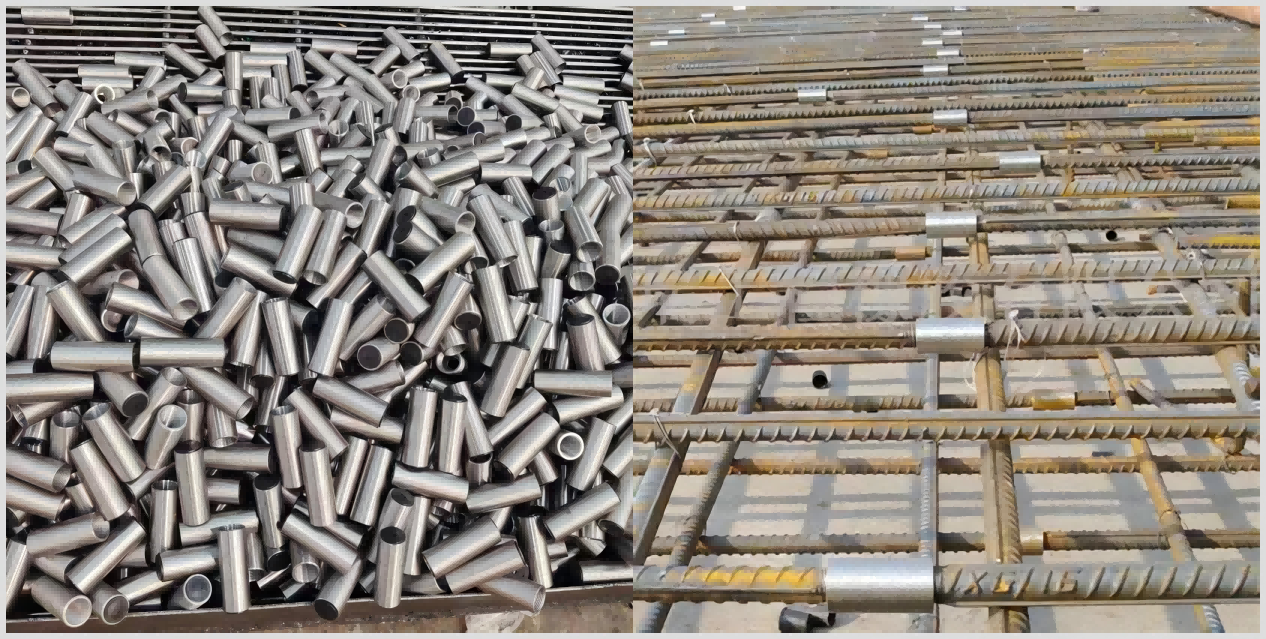
To mitigate these risks, structural engineers and contractors must evaluate advanced splicing technologies before pouring concrete. This guide examines common mechanical splicing failures and breaks down how a rib peeling rolling thread coupler resolves surface inconsistencies and ensures code-compliant load transfer across critical structural joints.
-
Surface Preparation is Critical: Standard threading on deformed bar often leads to thread deformation; removing the rib prior to threading ensures uniform engagement and mitigates bedding-in slack.
-
Cold Rolling Outperforms Cutting: Utilizing a parallel threading rebar coupler with cold-rolled threads preserves the bar's cross-sectional area and increases the tensile strength of the splice.
-
Cyclic Load Reliability: Properly torqued, rib-peeled connections eliminate the micro-movement (slip) that compromises structural integrity during seismic or high-wind stress reversals.
-
Vendor Accountability: Sourcing from a certified threaded rebar coupler manufacturer with strict QA/QC processes is essential for material traceability and code compliance (e.g., ACI 318, Eurocode 2).
The Structural Reality of Mechanical Splicing
Success Criteria for Splicing
Mechanical splices must meet strict baseline requirements to ensure structural safety across the entire concrete frame. The primary metric involves achieving at least 125% of the specified yield strength of the reinforcement bar. This ensures that any failure occurs within the rebar itself rather than at the splice location. Maintaining ductility across the connection is equally critical for seismic zones. A rigid connection that cannot absorb energy will fail catastrophically under dynamic loads. Engineers rely on these metrics to guarantee that the spliced section behaves as a continuous piece of steel, transferring tension and compression forces without interruption.
Field testing often reveals that achieving this 125% threshold requires precise mechanical alignment. When a splice is tested to destruction, the break must happen in the parent material. If the threads strip or the coupler body fractures, the connection fails the qualification test. This pass/fail criteria dictates which splicing methods are approved for high-rise and infrastructure projects.
High-Value Applications
Mechanical splicing outperforms traditional lapping in several critical structural zones where space is limited. Connecting vertical rebar in columns and shear walls demands precise alignment and high load transfer capabilities. Splicing heavy-duty rebar in continuous beams and massive foundation slabs also requires mechanical solutions to maintain structural continuity. In these high-stress areas, the physical space taken up by overlapping bars creates severe congestion.
Mechanical couplers eliminate this congestion, allowing for better concrete flow and structural integrity. When placing concrete in heavily reinforced transfer girders or core walls, the aggregate must pass through the rebar cage without segregating. Couplers reduce the steel-to-concrete ratio at the splice zone, ensuring the vibrator can reach the bottom of the formwork and consolidate the mix properly.
Limitations of Traditional Lapping
Lap splicing often fails in congested concrete pours due to physical space constraints. The physical blockage caused by overlapping reinforcement bars and reinforced inserts prevents proper concrete consolidation. This leads to voids and honeycombing within the structure, requiring expensive epoxy injection repairs. Furthermore, lap splices transfer load through the surrounding concrete rather than directly between the bars.
Under high seismic demands, the concrete can crack and spall, completely compromising the load transfer mechanism and leading to structural failure. When the concrete cover blows off during an earthquake, a lap splice loses its bond strength instantly. A mechanical splice, however, maintains its tensile capacity even if the surrounding concrete is severely damaged.
The Inconsistent Surface Challenge
Deformed bar presents a fundamentally flawed surface for direct thread cutting. Unlike smooth round bar used for anchor bolts, rebar features longitudinal and transverse ribs designed to bond with concrete. When you attempt to cut threads directly into this uneven surface, the resulting threads are inconsistent in depth and pitch. This inconsistency creates weak points along the thread profile.
It becomes nearly impossible to achieve a uniform, high-strength mechanical connection without proper surface preparation. The cutting dies bounce over the ribs, tearing the steel rather than cutting it cleanly. This leaves a jagged, stress-concentrating thread root that is highly susceptible to fatigue failure under cyclic loading.
Common Problems with a Standard Threaded Rebar Coupler
Thread Deformation and Bedding-In Slack
Poorly cut threads on a standard threaded rebar coupler deform under cyclic loading. When a structure experiences stress reversals from seismic activity or wind, the uneven threads grind against each other. This micro-deformation, known as bedding-in, creates dangerous slack within the connection.
Even a correctly installed thread-type coupler can loosen over time if the initial thread profile was compromised by the rebar's deformed surface. This slack allows the crack width in the concrete to increase beyond acceptable limits, exposing the reinforcement to moisture and accelerating corrosion.
The Labor-Intensive Myth vs. Reality
Many contractors perceive threading ends as more work compared to simple lap splicing. This myth stems from the upfront time required to fabricate the threaded ends in the cut-and-bend yard. However, this initial investment yields significant schedule savings during rebar cage assembly and concrete placement.
Mechanical couplers reduce rebar congestion, speeding up the tying process and eliminating the need to maneuver long, heavy bars into overlapping positions. The overall labor efficiency on site heavily favors mechanical splicing, especially when crane time is limited and ironworkers need to connect vertical column bars quickly and safely.
Cross-Threading and Installation Inefficiencies
Inconsistent thread pitches on directly cut rebar often cause cross-threading on-site. When workers attempt to thread the coupler onto an uneven bar end, the threads jam. This requires the crew to remove the coupler, clean the threads, and attempt the installation again.
These inefficiencies increase labor costs and delay pour schedules. A connection that requires brute force to assemble is also highly likely to fail inspection, requiring complete rework. If an ironworker uses a pipe wrench to force a cross-threaded coupler, they permanently damage the threads and compromise the joint's tensile capacity.
Cross-Sectional Area Reduction
Directly cutting threads into rebar removes steel from the bar's diameter. This structural penalty reduces the effective cross-sectional area of the reinforcement. The threaded portion becomes the weakest link in the structural chain.
When tension is applied, the reduced diameter concentrates stress, leading to premature yielding or failure at the splice rather than in the main body of the rebar. Engineers must often upsize the rebar to compensate for this loss of area, increasing the overall tonnage and cost of the steel package.
Coating Damage and Corrosion Risks
Integrating an epoxy coated rebar coupler presents unique challenges on civil engineering projects. The process of cutting threads and applying torque can easily compromise the anti-corrosion coating. If the epoxy is scratched or chipped by the pipe wrench jaws, the exposed steel becomes highly susceptible to rust.
Corrosion expands the steel, causing the surrounding concrete to spall and severely weakening the structural connection over time. Field crews must meticulously touch up any damaged areas with a compatible epoxy repair kit before the concrete is poured, adding another step to the quality control process.
|
Comparison of Rebar Splicing Methods |
|||
|
Splicing Method |
Cross-Sectional Area |
Installation Speed |
Cyclic Load Performance |
|---|---|---|---|
|
Lap Splicing |
100% (No reduction) |
Slow (Requires tying and maneuvering) |
Poor (Relies on concrete bond) |
|
Direct Cut Threading |
Reduced (Steel removed) |
Moderate (Prone to cross-threading) |
Moderate (Risk of bedding-in slack) |
|
Rib Peeling & Cold Rolling |
100% (Material displaced, not removed) |
Fast (Smooth parallel threads) |
Excellent (Work-hardened threads) |
The Rib Peeling Rolling Thread Coupler: A Technical Evaluation
Mechanism of Action
The rib peeling process begins by stripping the longitudinal and transverse ribs from the end of the rebar. Specialized machinery shaves the steel down to a precise, smooth cylinder. Once the ribs are removed, a thread rolling head applies immense pressure to cold-roll the threads onto the prepared surface.
This two-step mechanism guarantees a flawless thread profile that perfectly matches the internal threads of the coupler. The machinery must be calibrated daily to ensure the peeled diameter matches the exact specifications required for the rolling dies to form a full-depth thread.
Solving the Inconsistent Surface Problem
Creating a perfectly cylindrical base prior to threading is the only way to guarantee uniform thread depth and pitch. By removing the deformed ribs, the threading machine interacts with a consistent surface. This eliminates the weak spots and jagged edges associated with direct-cut threads.
The resulting connection features full thread engagement, maximizing the surface area available for load transfer and eliminating the risk of bedding-in slack. When the threads mate perfectly, the load is distributed evenly across all engaged threads, preventing localized stress concentrations that lead to premature failure.
Metallurgical Advantages of Cold Rolling
Cold rolling threads offers severe metallurgical advantages over cutting them. Instead of removing steel, the rolling process displaces the metal, forging it into the thread shape. This work-hardens the steel at the root of the thread, significantly increasing its fatigue resistance.
Furthermore, cold rolling preserves the original cross-sectional area of the rebar. The resulting threaded end is often stronger than the parent bar, ensuring the splice exceeds the 125% yield strength requirement. The grain structure of the steel is compressed and aligned along the thread profile, providing superior resistance to shear and tensile forces.
Parallel Threading Rebar Coupler Mechanics
A parallel threading rebar coupler provides superior alignment during installation. Unlike tapered threads, which can easily cross-thread if not perfectly aligned, parallel threads engage smoothly. They allow the bar to be spun freely until it bottoms out against the opposing bar or a center stop.
This makes visual inspection straightforward. An inspector can easily verify that no exposed threads remain outside the coupler, confirming full engagement. The parallel design also allows for positional splicing, where neither bar can be rotated, by using a fully threaded bar end and a lock nut to secure the connection.
Evaluating a Threaded Rebar Coupler Manufacturer
Material Traceability and Metallurgy
Sourcing components requires strict attention to material traceability. You must demand raw material certifications from your threaded rebar coupler manufacturer. These documents verify the steel grades and detail the heat treatment processes used during manufacturing.
Consistent metallurgy ensures that every coupler on the project will perform predictably under load. Without full traceability, you risk incorporating substandard steel into critical structural load paths. The mill test reports (MTRs) should be reviewed by the engineer of record before any couplers are installed on site.
Code Compliance and Third-Party Testing
Manufacturer claims mean nothing without independent verification. Ensure the products are tested against rigorous international standards such as ICC-ES, ACI 318, BS 8110, or ISO 15835. Request third-party testing reports that document tensile strength, ductility, and slip resistance under cyclic loading.
A compliant manufacturer will readily provide these documents, proving their couplers meet or exceed the statutory requirements for your specific jurisdiction. These test reports must be recent and applicable to the specific rebar grades and diameters being used on your project.
Production Capacity and Lead Times
Large-scale infrastructure projects require a massive volume of mechanical splices. Assess the vendor's production capacity to ensure they can meet your project schedule. Delays in coupler delivery will halt rebar assembly and push back concrete pour dates.
Establish clear lead times and verify the manufacturer's ability to scale production or maintain sufficient inventory to prevent procurement bottlenecks during peak construction phases. A reliable supplier will have contingency plans in place to handle sudden increases in demand or shipping disruptions.
Implementation Risks and Field Mitigation Strategies
Equipment Calibration
The precision of a rib-peeled connection relies entirely on the machinery used to create it. You must properly calibrate rib peeling and thread rolling machines on-site or at the fabrication facility. Regular calibration checks ensure the peeling blades remove the exact amount of material and the rolling dies form the threads to the correct pitch diameter.
Out-of-calibration equipment will produce rejected threads, wasting material and time. The site QA/QC manager should maintain a log of all machine calibrations and perform random thread profile checks using a go/no-go gauge.
Operator Training and Certification
Human error is a significant risk factor during rebar preparation. Mitigate this by establishing strict protocols for machine operation. Operators must perform visual inspections of every peeled and threaded bar end before it moves to the installation phase.
Leverage manufacturer-led training programs, including technical webinars and on-site certifications, to ensure your crew understands the specific tolerances required for a successful mechanical splice. An untrained operator can easily push the machine too fast, resulting in torn threads or undersized bar ends.
Torque Verification
Final installation requires rigorous QA/QC procedures. You must utilize calibrated torque wrenches to ensure every rebar coupler is locked to the manufacturer's specified torque value. Proper torquing eliminates any remaining micro-slack in the threads and engages the locking mechanism of the splice.
-
Clean all threads with a wire brush to remove dirt and concrete slurry.
-
Thread the coupler onto the fixed bar until it reaches the center stop.
-
Thread the continuing bar into the coupler until it bottoms out.
-
Apply the specified torque using a calibrated wrench.
-
Mark the completed connection with paint to indicate it has been inspected and torqued.
Thread Protection
Rolled threads are precision-engineered surfaces that require protection on the job site. Implement best practices for utilizing plastic end caps immediately after the threading process. These caps protect the threads from weather, dirt, and impact damage prior to final assembly.
A damaged thread will prevent the coupler from engaging properly, requiring the bar end to be cut off and re-threaded, causing unnecessary delays. If bars are stored on-site for extended periods, the threads should also be coated with a light rust inhibitor to prevent surface oxidation.
Conclusion
Standard threaded couplers offer a baseline solution, but the inherent inconsistencies of deformed bar make direct-cut threading a structural risk. The rib peeling rolling thread coupler provides the necessary precision and strength for critical load paths by ensuring uniform thread engagement and preserving cross-sectional integrity. Procurement teams and engineers should prioritize parallel threaded systems that utilize cold rolling and mandate strict torque verification protocols.
-
Request destructive testing data, including tensile and slip tests, from shortlisted manufacturers to verify performance claims.
-
Conduct a pilot test on-site to evaluate the efficiency of the peeling and rolling equipment before full-scale implementation.
-
Establish a strict QA/QC checklist for field crews, focusing on visual thread inspection and documented torque wrench calibration.
-
Ensure all exposed steel on epoxy-coated systems is properly re-coated immediately after threading to maintain corrosion resistance.
FAQ
Q: What is a rib peeling rolling thread coupler?
A: It is a mechanical splicing device that requires the rebar's longitudinal and transverse ribs to be shaved off. This creates a smooth cylinder before threads are cold-rolled onto the end, ensuring high precision, uniform thread depth, and maximum structural strength.
Q: Why do standard threaded rebar couplers develop slack?
A: Cut threads on uneven deformed bar can suffer from bedding-in or micro-deformation under cyclic stress reversals. As the uneven threads grind against each other during seismic or wind loads, the connection gradually loosens.
Q: Does threading reduce the tensile strength of the rebar?
A: Cut threading removes material and reduces the bar's effective diameter, lowering its strength. Cold rolling threads onto a peeled bar displaces material, work-hardening the steel and maintaining the bar's full cross-sectional strength.
Q: Can you use a mechanical rebar coupler on epoxy-coated rebar?
A: Yes, specialized epoxy-coated couplers are available. However, extreme care must be taken during the peeling and threading process. Crews must re-apply protective coatings to any exposed steel to maintain the system's overall corrosion resistance.
Q: What is the advantage of a parallel threading rebar coupler over a tapered thread?
A: Parallel threads allow for full thread engagement without the high risk of cross-threading common in tapered systems. They also do not require the strict torque-to-yield procedures of tapered threads, making field installation much more reliable.
Q: How do I choose a reliable threaded rebar coupler manufacturer?
A: Look for ISO certifications, independent tensile and slip test reports, and full traceability of raw steel. The manufacturer should also have the capacity to provide on-site technical support and equipment calibration services.
SHARE